
Functional
diagnosis
Diagnosis and treatment of craniomandibular dysfunction
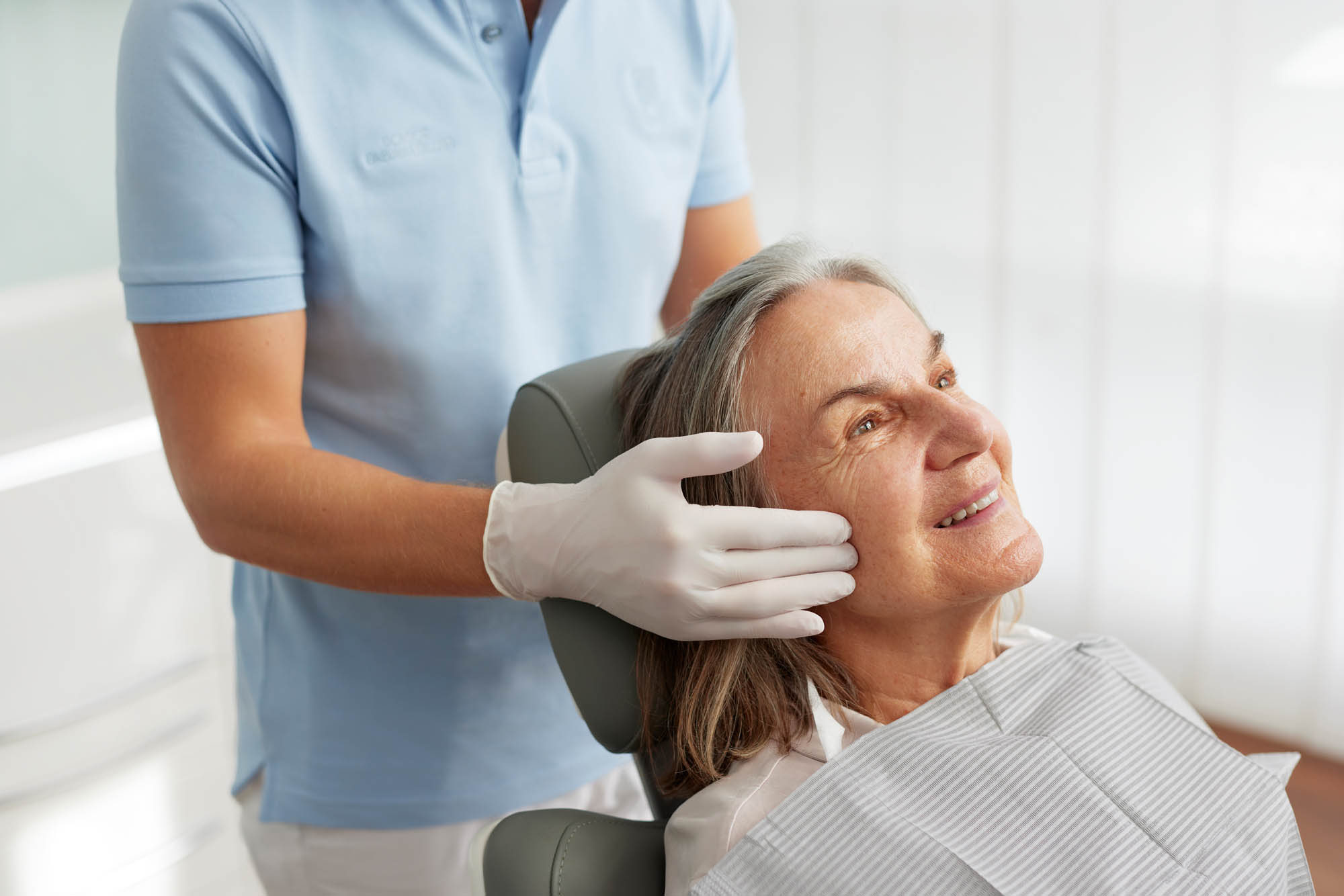
Dental functional diagnostics refers to the analysis of the cranio-mandibular system, which includes the teeth, jaw muscles, and jaw joints. Signs of craniomandibular dysfunction (CMD), that is, a jaw joint dysfunction, are, for example, a clicking jaw, general tension, or pain in the jaw, neck, and spinal area. With these symptoms or suspicion of CMD, we first thoroughly analyze the situation in our dental practice in Bogenhausen to find an individual solution. A jaw joint dysfunction often requires the collaboration of several disciplines. Therefore, we work with orthopedists, osteopaths, and physiotherapists.
Orthopedic treatment for jaw dysfunction
In most cases, craniomandibular dysfunction is initially treated with braces or is used in conjunction with therapy. A special upper jaw brace is individually tailored after measuring your jaw position and worn during sleep. This brace relieves the jaw joints and jaw muscles, reduces jaw clenching and thus alleviates pain and tension. Regular use can correct jaw alignment and achieve long-term freedom from discomfort. Botulinum toxin can also be used to support muscular tension. This active substance, also known as Botox®, reduces muscle activity in the jaw area and can thus relieve pain and improve jaw mobility.